


A California real estate LLC is one of the most effective tools for separating your investment property from your personal assets and limiting your liability if something goes wrong with a rental. For San Diego County property owners, however, true protection goes a step further. When a properly structured real estate LLC is combined with a revocable living trust, you gain both liability protection during your lifetime and probate avoidance for your loved ones after your death.
If you own investment property in California, you’ve probably heard that forming a Real Estate LLC (Limited Liability Company) is a “best practice” heading into 2026. While that advice is directionally correct, a standalone LLC is only part of the solution. On its own, an LLC does not prevent your real estate from going through probate, nor does it ensure smooth transfer to your heirs.
This guide explains how California real estate LLCs work, how to form one, how to properly integrate it with a living trust, and the specific planning strategies California investors should consider in 2026 to protect assets, reduce risk, and simplify estate administration.
What Is a California Real Estate LLC?
A real estate LLC is a legal entity formed specifically to hold and manage real estate investments. It blends the characteristics of corporations and partnerships, providing a flexible structure for property ownership.
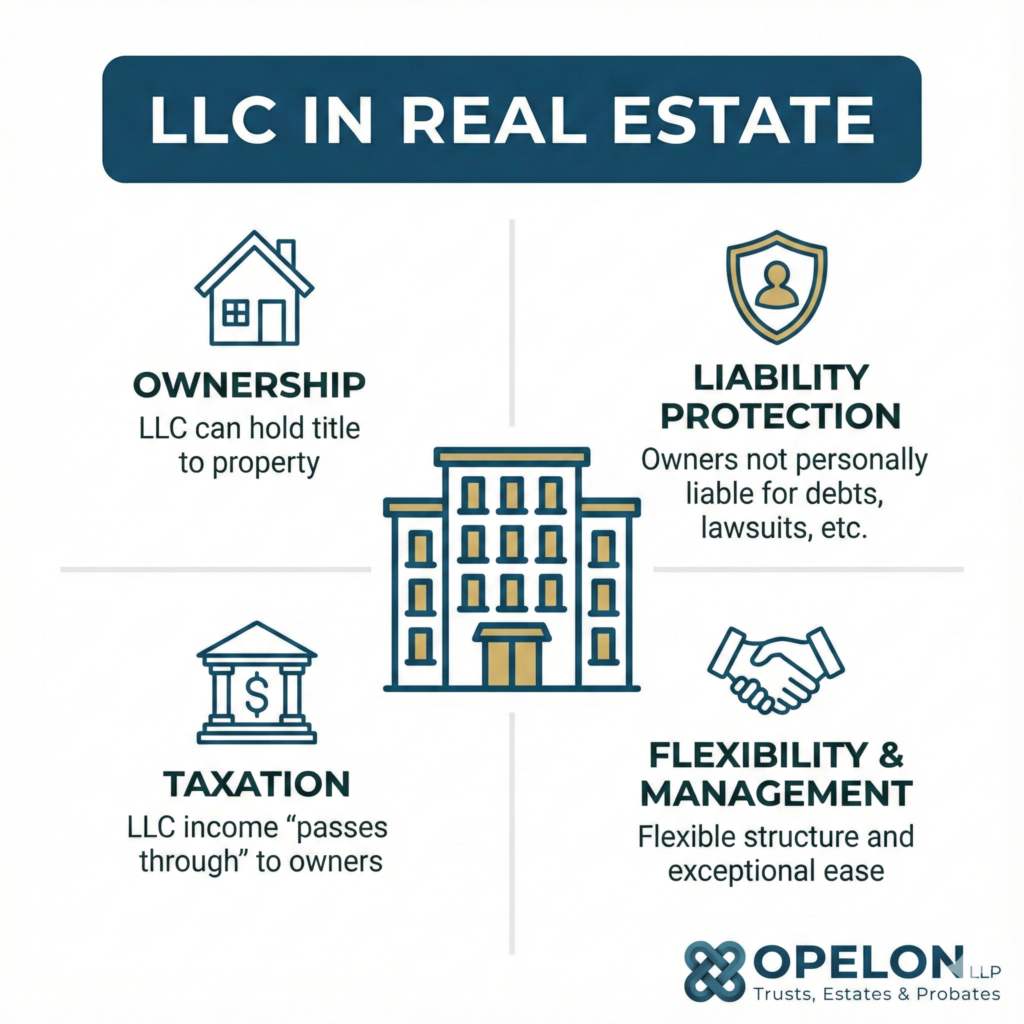
When you transfer property into an LLC, the company becomes the legal owner while you retain control as a member or manager. This separation is critical:
- Liability Protection: If a tenant slips and sues, the LLC shields your personal assets (like your home and savings) from the lawsuit.
- Privacy: It keeps your name off the public deed, enhancing privacy in public databases.
- Professionalism: It creates a business-oriented approach to property management, enhancing credibility with lenders and tenants.
The “Inside-Out” & “Outside-In” Protection
Effective risk management requires understanding two types of protection:
- Inside-Out Protection: Shields your personal assets from lawsuits arising from within the property (e.g., a tenant injury).
- Outside-In Protection: If you are sued personally (e.g., a car accident), creditors are generally limited to a “charging order” against your LLC interest, rather than seizing the property itself.
The Strategy: Combining LLCs with Living Trusts
A common question we hear from San Diego investors is: “Do I need a trust or an LLC?”. The answer is often both.
Feature | Personal Ownership | Living Trust | LLC Only | LLC + Trust (Recommended) |
Liability Protection | None | None | Yes | Yes |
Probate Avoidance | No | Yes | No | Yes |
Privacy | None | Some | Moderate | High |
How It Works
- The LLC holds the title to the property for liability protection.
- The Trust holds the LLC membership interest for probate avoidance.
This ensures that if you pass away, your successor trustee can manage or distribute the LLC without California probate courts getting involved, saving your family time and money.
How to Start an LLC for Real Estate in California (2026 Checklist)
Forming an LLC involves more than just filing a form. To ensure your liability protection holds up in court, follow this checklist:
Choose a Name & File Articles of Organization
You must select a unique name and file Articles of Organization with the California Secretary of State. This officially registers your legal entity.
Designate a Registered Agent
You must appoint a registered agent with a physical California address to handle legal documents and service of process.
Draft a Robust Operating Agreement
Although not strictly required by California law to file, this is your most important internal document. It outlines management roles, profit sharing, and decision-making.
Pro Tip: A well-drafted agreement is essential to prevent “piercing the corporate veil” and losing liability protection.
Obtain an EIN & Open a Business Bank Account
You will need an Employer Identification Number (EIN) from the IRS for tax purposes. Once you have this, open a separate business bank account to prevent commingling funds, the fastest way to lose your legal protection.
File the Statement of Information
Within 90 days of formation, and every two years thereafter, you must file a Statement of Information to keep your LLC in good standing.
Key Takeaways
- Forming a California real estate LLC requires more than filing paperwork; Proper setup is critical to preserving liability protection.
- Filing Articles of Organization and appointing a registered agent legally establishes your LLC.
- A strong operating agreement and strict separation of personal and business finances help prevent “piercing the corporate veil.”
- Obtaining an EIN and opening a dedicated business bank account are essential early steps.
Ongoing compliance, including timely Statements of Information, is required to keep your LLC in good standing.
Buying & Transferring Property in Real Estate LLC’s: Key Considerations
Can an LLC Buy a House in California?
Yes. An LLC can purchase residential, commercial, or multifamily properties.
- Buying New: You secure financing and take title directly in the LLC’s name. Note that residential lenders may have stricter requirements for LLC borrowers.
- Transferring Existing Property: If you already own the property, you can record a grant deed transferring it to your LLC.
- Warning: Check your mortgage’s “due on sale” clause before transferring title.
- Taxes: Generally, transferring to an LLC where you are the sole owner does not trigger a Property Tax reassessment under Prop 13, but you must be careful with ownership percentages.
The Cost of Protection (Franchise Tax)
California imposes a minimum annual franchise tax of $800 on every LLC, regardless of income. While this is a cost, for properties with significant equity or rental activity, the liability protection is often worth the investment.
Benefits of LLCs Buying Property:
- Liability separation: Personal and business assets are distinct.
- Professional presence: Enhances business credibility.
- Flexible ownership structures: Suits various investment goals.
LLCs are not limited to single properties. They can own multiple real estate investments. Using an LLC to buy property supports portfolio growth and risk segregation.
This makes them a versatile tool for expanding a property portfolio. Overall, buying property through LLC structures offers many advantages for investors in California, including using an LLC to purchase a home when appropriate.
Single-Member vs. Multi-Member LLC Taxation
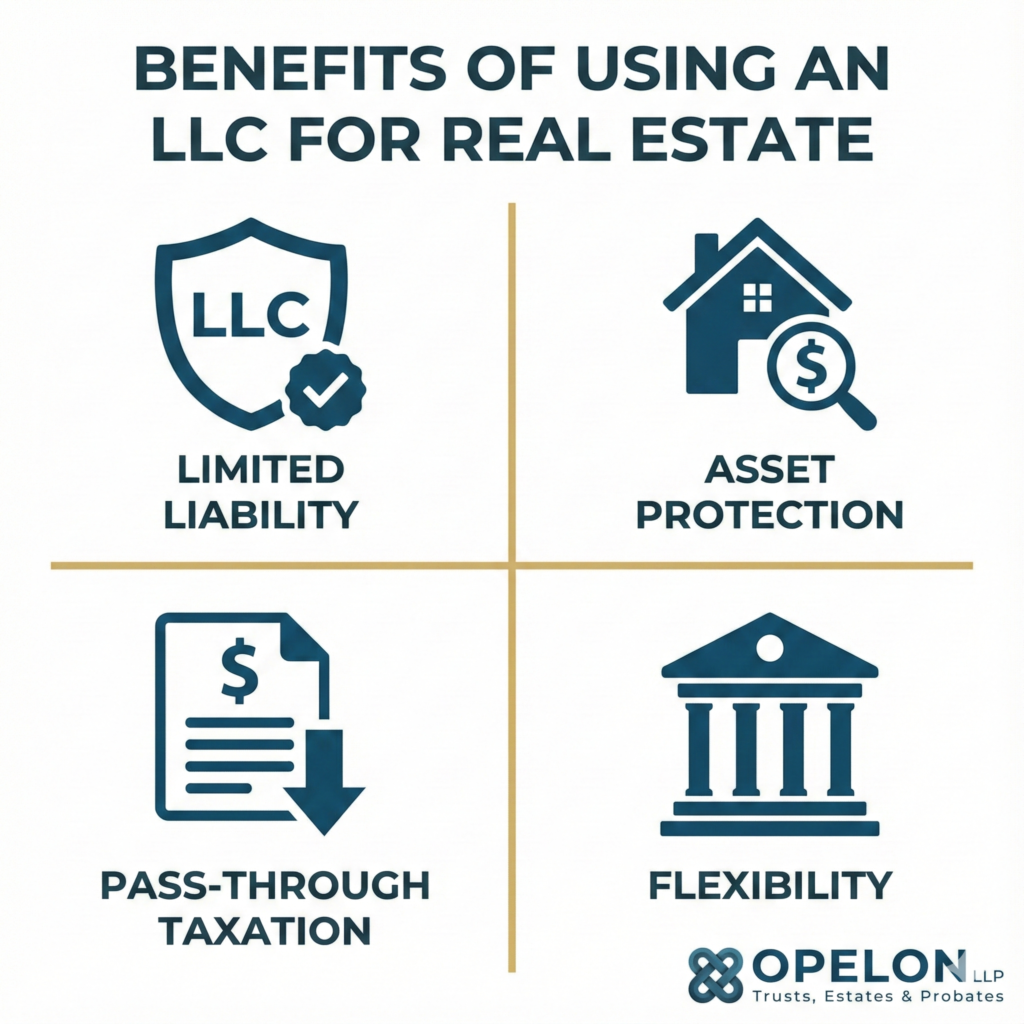
Single-member LLCs are typically treated as disregarded entities. Thus, profits are reported on the owner’s personal tax return. This setup simplifies filing but results in self-employment taxes.
Multi-member LLCs, meanwhile, are often considered partnerships. This requires filing an informational return with the IRS. Each member reports their share of the income.
Here’s a breakdown of differences:
- Single-member: Simplified filing but increased tax burden.
- Multi-member: Additional paperwork, but shared tax responsibilities.
Buying Different Types of Property with an LLC
An LLC can help you acquire various types of property. An LLC can own multiple types of real estate, such as homes, businesses, or apartment buildings. This makes it easy for investors to grow their portfolios.
Key Takeaways
- California law allows LLCs to buy and hold homes, commercial buildings, and multifamily properties.
- New purchases can be financed and titled directly in the LLC’s name, though lender standards may be stricter.
- Existing properties may be transferred to an LLC by recording a grant deed, subject to lender approval.
- A property transfer to a single-owner LLC is often not reassessed under Prop 13, if structured properly.
- Every California LLC must pay an $800 annual franchise tax.
- LLCs provide asset separation and liability protection for real estate investors.
- Using an LLC can improve professional credibility with tenants, vendors, and partners.
- Single-member LLCs are typically taxed as disregarded entities.
- Multi-member LLCs are generally taxed as partnerships.
- LLCs can hold multiple properties across different asset classes
Estate Planning and Transferring Property with an LLC
Using an LLC for estate planning can offer significant benefits. It simplifies the process of passing property to heirs. This is because the LLC’s interests can be transferred rather than the real estate itself.
Transfers are often smoother and more private. The LLC structure avoids potential public court proceedings, reducing delays. It also provides a clear outline for ownership changes upon a member’s death.
Key advantages of using an LLC for estate planning include:
- Privacy in Transfer: Avoids public probate court.
- Simplified Process: Changes ownership without changing the property title.
- Clearly Defined Succession: Operating Agreement details succession plans.
By incorporating an LLC, property owners ensure smoother transitions for future generations. This approach minimizes complications and costs, providing more secure transfers.
Different property types come with unique considerations. An LLC adapts to these needs, offering a consistent framework for ownership.
This flexibility makes it easier to manage diverse investments. It also supports diversified strategies without added complications. For example, if you’re evaluating how to buy a multifamily property with an llc, lenders and title companies may have specific documentation requirements.
Forming an LLC to buy properties presents numerous advantages. These include legal benefits and structuring convenience, tailored to each property type:
- Residential: Provides personal liability protection.
- Commercial: Enhances operational credibility.
- Multifamily: Simplifies management across units.
Overall, using an LLC helps manage these complexities and aligns diverse assets under one umbrella.
Key Takeaways
- LLC ownership allows estate transfers through membership interests, rather than retitling real estate, making succession simpler and more efficient.
- Using an LLC for estate planning can help avoid public probate court and support more private, streamlined transfers to heirs.
- A well-drafted Operating Agreement can clearly define succession and ownership changes upon a member’s death.
- LLCs provide a flexible framework for managing residential, commercial, and multifamily properties under one coordinated structure.
Best Practices for California Real Estate LLCs in 2026
In 2026, adhering to best practices for real estate LLCs in California is crucial. Proper planning and execution can significantly impact success. Understanding the landscape helps navigate potential pitfalls effectively.
LLC vs. Other Ownership Structures
Understanding how an LLC compares to other ways of holding property helps clarify when each approach makes sense.
Feature | Personal Ownership | Living Trust | LLC |
Liability Protection | None | None | Yes |
Probate Avoidance | No | Yes | Only if trust owns LLC |
Annual State Fee | $0 | $0 | $800 minimum |
Pass-Through Taxation | Yes | Yes | Yes |
Privacy | None (public record) | Some | Moderate |
Here are some key practices to consider:
- Comprehensive Research: Investigate local market conditions.
- Professional Advice: Consult with legal and tax professionals.
Proper documentation is essential in managing an LLC. Creating a robust Operating Agreement lays a foundation for smooth operations and resolves disputes efficiently. This agreement should clearly outline roles, decision-making processes, and profit distribution.
Financial management remains a priority. Ensure financial records are up to date and accessible. Use reliable accounting software to ensure transparency and precision. This approach helps avoid tax issues and enhances financial oversight.
Additionally, staying informed about regulatory changes is vital. Laws and tax codes can evolve, impacting LLC operations. Regular reviews with advisors ensure compliance and optimal structure. Prioritize:
- Regular Audits: Schedule financial and legal audits.
- Ongoing Education: Stay up to date on real estate trends.
By following these best practices, investors can capitalize on the benefits of using an LLC. This proactive approach supports sustainable and profitable real estate ventures.
Mortgage Considerations when Moving Title to a California Real Estate LLC
If your investment property is mortgaged, review your loan documents before transferring it to an LLC. Most mortgages include a “due on sale” clause that allows the lender to call the loan upon a change in ownership.
In practice, lenders rarely enforce this clause for transfers to LLCs owned by the same borrower, especially when payments continue uninterrupted. However, it is advisable to discuss this with your lender or an attorney before making the transfer.
Common Mistakes to Avoid with a California Real Estate LLC
Based on our work with California property owners, we see several recurring issues that can undermine LLC protection.
- Commingling funds. Mixing personal and LLC finances is the fastest way to lose liability protection. Open a separate bank account for your LLC and use it for all property-related transactions.
- Skipping the operating agreement. California does not require LLCs to have an operating agreement, but courts look at whether you treated the LLC as a legitimate business. A well-drafted operating agreement demonstrates that separation.
- Undercapitalizing the LLC. An LLC with no capital and no insurance may not provide the protection you expect. Courts can “pierce the corporate veil” if the LLC appears to be a sham.
- Forgetting to fund the trust. If your goal is probate avoidance, remember to assign your LLC membership interest to your trust. The LLC alone does not provide this benefit.
- Letting compliance lapse. California LLCs must file a Statement of Information every two years and pay the annual franchise tax. Falling behind can result in the suspension of your LLC.