


Navigating California Probate: Your Guide to the 3 Different Types of California Probate

Understanding the different types of probate in California is essential for families who are navigating the estate process after losing a loved one. Depending on the value of the estate and the kinds of assets involved, probate can take several forms—from formal probate for larger estates, to simplified summary probate for mid-sized estates, to the use of a small estate affidavit for quicker transfers. Each option has unique requirements, timelines, and benefits, and knowing which path applies can save both time and expense during an already difficult period.
Opelon LLP’s Lawyer Matt Odgers Named to 2026 Best Lawyers: Ones to Watch® in America

San Diego, August 21, 2025 — Opelon LLP is pleased to announce that partner Matt Odgers lawyer has been included in the 2026 edition of Best Lawyers: Ones to Watch® in America.
Estate Planning for Bitcoin in 2026: How to Fund a Trust With Bitcoin and Protect Your Cryptocurrency

Estate planning for Bitcoin may be the most overlooked gap in your family’s financial protection. An estimated 30% of American adults hold cryptocurrency in 2026, but the blockchain has no beneficiary form, no transfer-on-death designation, and no customer service line. If your successor trustee cannot find your private key, your Bitcoin dies with you.
Ultimate Guide to Surviving California Probate (2026 Update)
California Probate is a Court process required to manage a Decedent’s estate and distribute his or her assets. Probate is statutorily driven, meaning that much of the process is governed by the statutes/laws passed by the California legislature and set forth in the California Probate Code.
2026 Federal Estate Tax Exemption: What California Families Need to Know
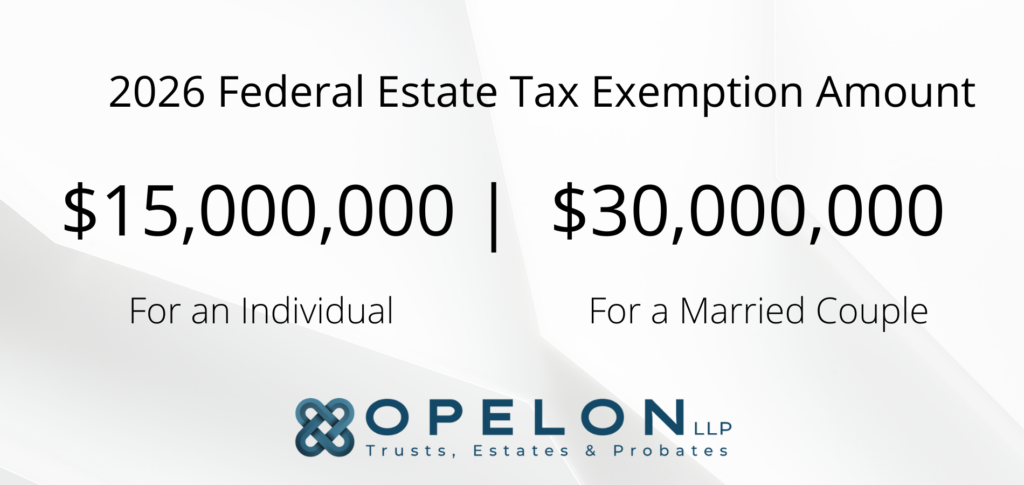
Big changes are here for estate planning in 2026. The federal estate tax exemption has increased to $15,000,000 for an individual and $30,000,000 for a married couple, a significant jump from the 2025 exemption of $13.99 million.
So how does this affect you? Put simply, you will only owe federal estate tax if the total value of your estate exceeds these thresholds