


Summary
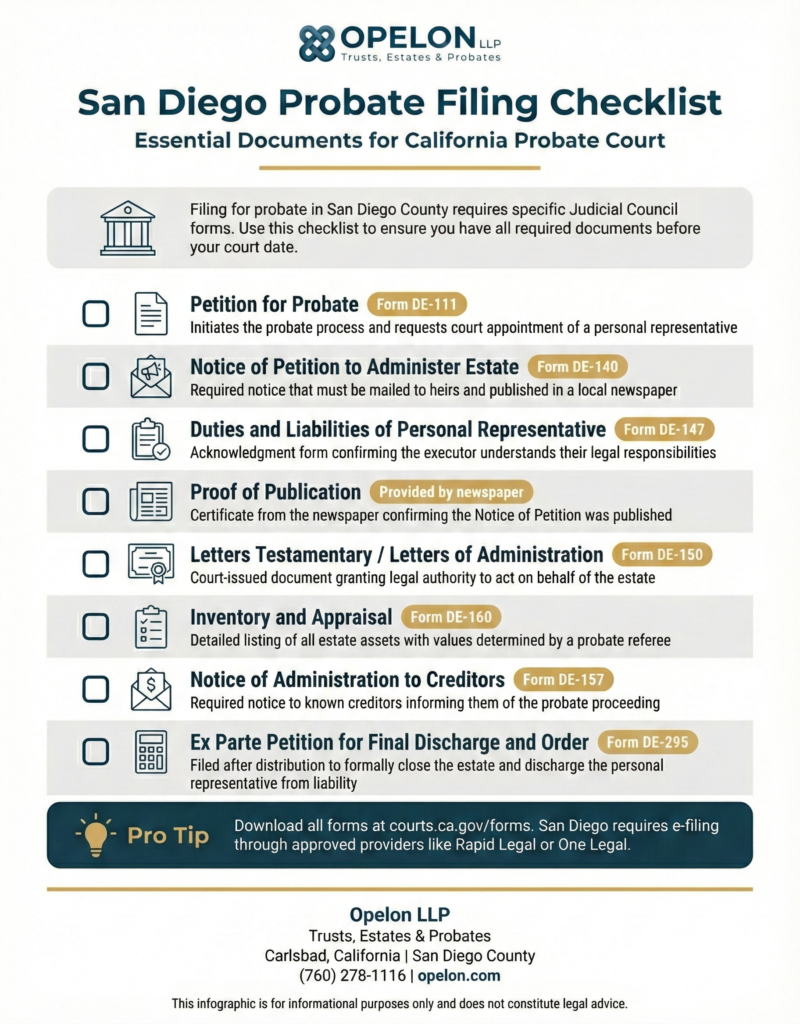
In San Diego probate, core filings include the Petition for Probate, Notice of Petition to Administer Estate (with newspaper publication), the Order for Probate and Letters, an Inventory and Appraisal, and a Final Accounting, plus required notices and tax documents.
The San Diego probate process generally involves filing the petition, publishing and serving notice, obtaining the court’s order and letters, and meeting deadlines for the inventory and later accounting. Executors should maintain meticulous records, communicate with beneficiaries, and seek legal counsel as needed; estate-planning tools such as living trusts and beneficiary designations can help avoid probate.
The San Diego Probate Court (the probate court San Diego residents use) offers forms, workshops, and directories of assistance to support filers.
Understanding Probate in San Diego
Probate is an essential legal process in estate administration. When someone passes, their estate must go through probate.
This ensures assets are distributed according to the will or state law.
In San Diego, the probate process involves several steps. First, a will is validated if one exists. Then, an executor is appointed by the probate court.
Key reasons probate is necessary include:
- Ensuring debts are paid
- Distributing assets correctly
- Providing a legal framework for estate management
Navigating the San Diego probate process requires meticulous attention to documentation and deadlines. Getting familiar with the basics can aid significantly.
Key Probate Documents Required in San Diego Probate
Filing for probate in San Diego involves specific documentation.
Each document plays a unique role in estate administration. Understanding these documents can help streamline the probate process significantly. These are the core probate documents San Diego courts expect.
Key probate documents include:
- Petition for Probate: The Petition for Probate initiates the process. It includes detailed information about the deceased and their estate.
- Notice of Petition to Administer Estate: The Notice of Petition to Administer Estate must be published in a local newspaper. This informs creditors and beneficiaries about the proceedings.
- Order for Probate and Letters: The Order for Probate and accompanying Letters officially appoint an executor. These documents allow the executor to manage the estate.
- Inventory and Appraisal: An Inventory and Appraisal lists all assets with their respective values. It’s crucial for accurate asset distribution.
- Final Accounting: Finally, a Final Accounting provides a financial summary of the entire probate process. This document ensures transparency and accountability.
San Diego Petition for Probate
The Petition for Probate is the first step in the San Diego probate process. It officially begins the administration of the deceased’s estate. This document contains essential details about the deceased and their assets.
Filing the Petition involves submission to the San Diego probate court. The executor can then manage the estate under court supervision. This crucial document initiates necessary legal procedures for effective estate management.
Notice of Petition to Administer Estate in San Diego
The Notice of Petition to Administer Estate serves as a public announcement. It must be published in a local newspaper in San Diego. This step ensures all interested parties, including creditors and heirs, are informed.
Notifying these parties helps in preventing disputes later. By publishing this notice, executors comply with legal requirements. This transparency facilitates a smooth and orderly probate process.
Order for Probate and Letters in San Diego
Once approved, the court issues an Order for Probate. This document officially begins the probate process. It confirms the court’s approval of the executor’s appointment.
Alongside this order, Letters Testamentary are issued. These letters grant the executor legal authority to manage the estate. Such permissions enable executors to perform their duties effectively.
Inventory and Appraisal for San Diego Probate
The Inventory and Appraisal is a detailed listing of the estate’s assets. Each asset is carefully evaluated and assigned a value. This document is crucial for equitable distribution to beneficiaries.
Executors file this with the probate court to ensure accountability. The value assessment helps in resolving debts and distributing the estate efficiently. Accurate inventory prevents conflicts among heirs.
Final Accounting and Other Supporting Documents
Final Accounting summarizes all financial transactions during probate. It includes income, expenses, and distributions made. This document ensures transparency and legal compliance.
Other supporting documents may also be required, such as:
- Notices to beneficiaries
- Affidavits of publication
- Tax returns for the estate
Completing these documents ensures all aspects of the probate are covered comprehensively.
Proper documentation helps avoid legal complications.
Steps to File Probate Documents in San Diego
Filing probate documents in San Diego involves precise steps. It’s essential to understand each phase clearly. The process can be daunting, but thorough preparation makes navigation easier.
First, gather all necessary documents. Verify their accuracy and completeness. Submit the Petition for Probate to the probate court in San Diego.
Next, publish the Notice of Petition to Administer Estate in a local newspaper. This step must occur before the first court hearing. Notify all heirs and creditors during this period.
Once the court issues the Order for Probate, obtain the executor’s legal documents. These include the Letters Testamentary, permitting estate management.
Finally, prepare and submit the Inventory and Appraisal. Meet all deadlines set by the court for filings. This ensures compliance and avoids potential penalties.
Key steps include:
- Gather necessary documents
- Submit Petition for Probate to court
- Publish Notice of Petition to Administer Estate
- Obtain Order for Probate and Letters Testamentary
- Prepare Inventory and Appraisal
Adhering to these steps promotes a smoother probate process. This diligence minimizes potential legal hurdles. Legal assistance often proves invaluable for complex cases.
Common Challenges and Tips for Estate Administration
Estate administration can present many challenges. Executors often face complex legal and financial issues. Timely resolution of these matters is critical.
Disputes among heirs or beneficiaries are common. They can significantly delay the probate process. Avoiding these conflicts requires clear communication and transparency.
Executors must maintain meticulous records. Accurate documentation is essential for court approval. Mistakes can lead to legal liabilities.
Here are some helpful tips:
- Communicate openly with beneficiaries
- Keep detailed records of all transactions
- Consult with legal professionals when needed
By anticipating challenges, executors can manage the estate effectively. Proactive planning reduces stress and ensures compliance with legal duties.
How Estate Planning Can Help Avoid Probate
Effective estate planning San Diego residents pursue is a valuable tool for avoiding probate. It minimizes legal complications and streamlines the transfer of assets. Many people overlook its importance.
Estate planning involves strategies that can bypass probate. These strategies not only save time but also reduce costs. Here are some key methods:
- Establishing a living trust
- Designating beneficiaries on accounts
- Creating joint ownership agreements
Implementing these techniques can prevent your estate from going through the lengthy probate process. It ensures a smooth transition of assets to your heirs or beneficiaries. With careful planning, families can avoid unnecessary stress and expense.
Resources and Support from San Diego Probate Court
The San Diego Probate Court offers numerous resources to assist with the probate process. Understanding available support can ease this often daunting task.
Key resources include:
- Workshops and clinics for guidance
- Online forms and instructions
- Access to legal assistance directories
These resources help executors and beneficiaries manage estate administration more effectively. Taking advantage of these tools can streamline processes and reduce stress.
Conclusion
Probate in San Diego involves essential documents and a structured process. Understanding and preparing these can simplify estate administration.
Ensure you prepare the probate documents required in San Diego, and seek guidance from local resources or legal professionals as needed to ensure a smooth probate process.