

Trusted Encinitas Probate Lawyer

California probate is the court-supervised legal process of identifying a decedent’s assets, paying valid creditor claims and taxes, and distributing the remaining property to heirs or beneficiaries under California Probate Code §§ 8000 et seq. Encinitas estates are filed in the San Diego County Superior Court Probate Division and typically take 9–18 months to close. Statutory attorney’s fees on a $1 million estate run approximately $46,000 (Cal. Probate Code § 10810). Opelon LLP serves Encinitas families from our Carlsbad office, with same-week consultations and transparent flat-fee scheduling.
An Experienced Probate Firm for Encinitas
Why Do You Need an Encinitas Probate Lawyer?
Simplicity
A trusted probate firm can help your family navigate California’s complex probate code.
Protection
Eliminate errors during the process and protect your family’s generational wealth.
Support
Meet your court deadlines and filings so your family can focus on what matters.
Why Choose Opelon for Encinitas Probate
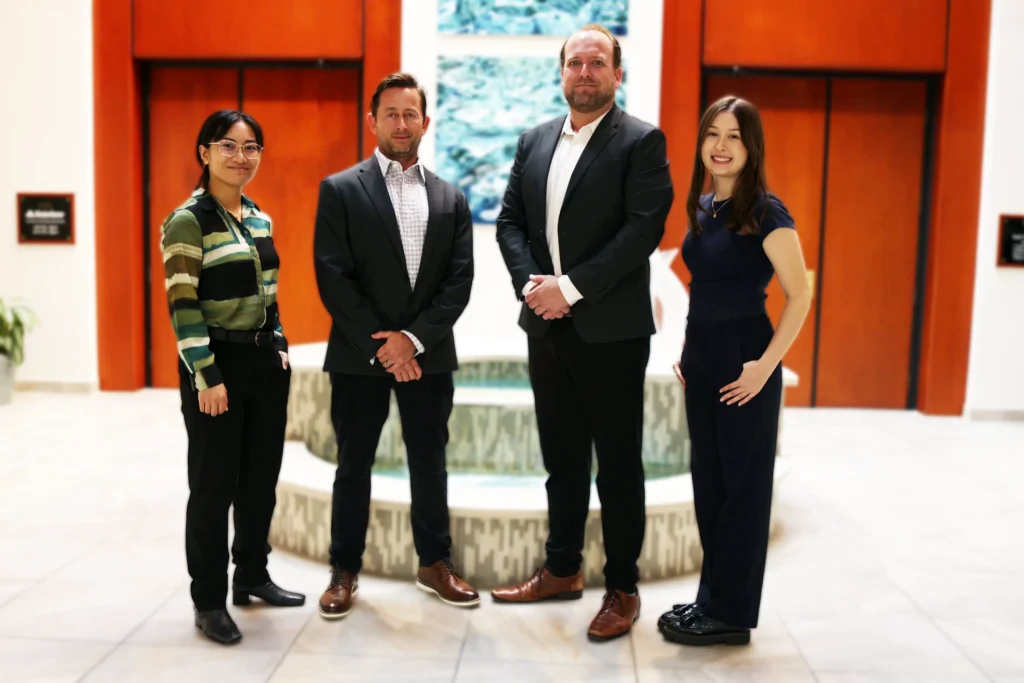
Opelon LLP is dedicated to helping Encinitas families protect their futures with clarity, confidence, and compassion. Our practice focuses on estate planning, trust administration, and probate, offering tailored legal solutions that meet each client’s unique needs.
We understand that these decisions can feel overwhelming, so we simplify complex processes and guide you step-by-step, ensuring you always know what to expect. At Opelon, efficiency matters; We streamline paperwork, communication, and timelines to save you time, stress, and unnecessary costs.
Above all, we prioritize relationships: you receive personalized attention, practical advice, and a trusted partner committed to safeguarding your legacy. Families choose Opelon because they want expert support delivered with professionalism, empathy, and integrity.

Most Encinitas families I work with don't realize their primary residence alone exceeds the $208,850 small-estate threshold. Real estate is what forces probate, not net worth.
T. Owen Rassman, Esq., LL.M. Tweet
EXCELLENT Based on 117 reviews
 Posted on Google
 james dunningOwen and entire staff answer all of our questions in timely manner .Posted on Google
 Harry TozlianWe had a very positive experience working with our attorney on our trust. He was personable, easy to talk to, and took the time to explain everything clearly so we felt comfortable with the process. The work was completed efficiently and on schedule, and his pricing was in line with other firms we considered. Overall, we felt well taken care of and would confidently recommend his servicesPosted on Google
 Tiffany McKayWe created a trust with Mr. Rassman over a decade ago and he was most helpful then. We recently needed to update information and, once again, the appointment was informative and the entire interaction pleasant.Posted on Google
 David WheelerOwen and his team were great to work with. They made the process of setting up our trust very easy.Posted on Google
 Arlene WhitneyI cannot recommend Owen highly enough! Navigating through probate while grieving the loss of my father was overwhelming, and from the very beginning, he was honest, trustworthy and an exceptional communicator. Owen is extremely knowledgeable and took the time to explain every step of the process clearly and thoroughly, ensuring I always undestood what was happening. He was consistently available, incredibly responsive, and never once made me feel uncomfortable or hesitant about asking questions - no matter how small. His patience and professionalism were unwavering. What truly sets him apart is his kindness and compassion; this was apparent from the very first phone call. He provided outstanding legal guidance but also genuine care and reassurance. I always felt supported, informed and confident that I was in the best possible hands. If you are looking for a probate attorney who is honest, trustworthy, knowledgeble, and truly compassionate, I cannot recommend him strongly enough. I am grateful for his guidance and support and cannot say enough good things about him. Thank you, Owen!Posted on Google
 Moran AEasy to schedule and communicate with the lawyer and his staff. Fast and friendly response to all our needs. Got detailed explanations of all the steps along the way and possible future scenarios. Overall, the Opelon team made the process smooth and easy for us.Posted on Google
 Sam LOwen and Jennifer are amazing! It was a slightly more complicated case since I am based in Texas, and the case was based in California. They were in constant contact, always keeping me updated, and they were always quick to respond via email, text, or phone call when I had questions or concerns. If you ever have a need for a Probate lawyer, I cannot sing the praises of Owen Rassman and his staff enough! Samantha LoewePosted on Google
 David KeyOpelon LLP lawyer Owen Rassman is friendly and efficient. His fee for a trust is reasonable and clearly spelled out as fixed cost. His trust boiler plate seems comprehensive and authoritative. He was helpful in guiding the statement to define my desired inheritance bequests. He and his office secretary were prompt and accurate in responding to change requests, and the final signing was a pleasant experience. I would not hesitate to recommend Opelon LLP and Owen’s services to family and friends.Posted on Google
 BarbaraI was referred to Owen Rassman at Opelon LLP by my financial planner, and it was an excellent recommendation. Owen was knowledgeable, patient, and very responsive, and he took the time to explain everything clearly throughout the trust-planning process. He also helped me set up a pet trust, which meant a great deal to me. Owen and his assistant, Satori, made the entire process feel smooth and reassuring from start to finish. If you’re looking for someone you can truly trust to help you create a living trust, I highly recommend Owen Rassman and Opelon LLP.
First 30 Days After a Death: A Practical Checklist
When a loved one passes away in San Diego County, the first 30 days are the most important for protecting the estate and meeting California’s statutory deadlines. Here’s what families typically need to do:
- Order 15–20 certified copies of the death certificate from the funeral home or San Diego County Vital Records. Most institutions require an original.
- Locate the will, trust, and other estate planning documents. These are often kept in a home safe, with the attorney who drafted them, or in a safe deposit box.
- Notify Social Security (1-800-772-1213) — usually handled by the funeral home, but confirm.
- Contact the decedent's bank, brokerage, life insurance, and retirement plan administrators. Each will request the death certificate and may freeze accounts pending probate.
- Begin documenting assets: real property, accounts, vehicles, business interests, and personal property of meaningful value.
- Determine whether probate is required. In California, estates with probate assets above $208,850 generally require formal probate. Estates below that threshold may use simplified procedures.
- Schedule a consultation with a California probate attorney within 30 days of the death. The 9–18 month statutory probate clock does not start until the petition is filed — every week of delay extends the timeline.
Not sure whether probate is required? Our free California probate decision tool walks you through the thresholds in about two minutes. If you would rather talk it through, Opelon LLP offers a free 15-minute phone consultation, usually the same week. It is a needs evaluation, not legal advice, and we do not review documents on it.
What Does an Encinitas Probate Lawyer Do?

When someone passes away, their money, home, and belongings must be legally transferred to the right people. In California, this process, called probate, can be complicated and time-consuming. A probate lawyer helps families navigate the court system, handle paperwork, and avoid costly mistakes.
They make sure the estate is managed correctly, deadlines are met, and any disputes are handled quickly. With a probate lawyer, families get guidance, protection, and peace of mind during a difficult time, so they don’t have to figure everything out on their own.
How Long Is the Process With an Encinitas Probate Lawyer?

Probate doesn’t happen overnight, most cases in California take 9 to 18 months, depending on the size of the estate and whether any complications come up. The process begins when the court appoints an executor, followed by gathering and valuing assets, notifying creditors, paying debts and taxes, and finally distributing what’s left to the heirs.
Delays can happen if documents are missing, disagreements arise, or the court calendar is backed up. A probate lawyer helps keep the process moving by handling paperwork correctly, meeting every deadline, and addressing issues before they become major setbacks. With professional guidance, families often experience a smoother and faster probate process.
How Much Does an Encinitas Probate Lawyer Cost?

Probate costs in California are set by law, which means attorney and executor fees are based on the value of the estate, not hourly rates. These fees come out of the estate itself, not out of pocket from the family. In addition to attorney fees, there may be court filing fees, appraisal costs, and small administrative expenses.
While this can add up, a probate lawyer helps prevent costly mistakes and delays that could increase expenses. By guiding the process efficiently, they help protect the estate’s value and ensure families only pay what’s necessary under California law.
What an Encinitas Probate Lawyer Takes Off Your Plate

- Prepare, file, and manage all required court documents and deadlines
- Collect, organize, and value estate assets, including coordinating appraisals and financial records
- Handle communication with heirs, beneficiaries, creditors, and the court
- Address and resolve creditor claims, legal questions, and any disputes that arise
- Guide the executor through each step to ensure the estate is settled and distributed properly and legally
What probate fees look like for a typical Encinitas estate
Statutory attorney and executor fees under Cal. Probate Code § 10810 are calculated on the gross fair market value of the estate, not net equity. For a typical Encinitas family with a primary residence valued at approximately $1,500,000, the combined statutory fees would be:
- Attorney statutory fee: $28,000
- Executor statutory fee: $28,000
- Combined statutory fees: $56,000
Court costs, the probate referee fee, publication costs, and extraordinary fees for complex matters are additional ($2,000–$5,000 typical for a routine case). Mortgages and other debts do not reduce the gross value used for the fee calculation.
For the full statutory fee tier breakdown across estate values from $300,000 to $1.5 million, see our California Probate Fees guide.
Encinitas Probate Attorney Fees
California probate attorney fees are set by statute under California Probate Code §10810. Fees are calculated as a percentage of the estate’s gross value — not net value after debts.
Estate Value | Attorney Fee | Executor Fee | Combined |
$300,000 | $9,000 | $9,000 | $18,000 |
$500,000 | $13,000 | $13,000 | $26,000 |
$750,000 | $18,000 | $18,000 | $36,000 |
$1,000,000 | $23,000 | $23,000 | $46,000 |
$1,500,000 | $28,000 | $28,000 | $56,000 |
Fee anchor rationale: Encinitas median home values are among the highest in North County.
How to Avoid Probate in Encinitas, California
These probate-avoidance tools work best as part of a complete Encinitas estate planning strategy put in place before they are needed.
| Strategy | How It Works | Learn More |
|---|---|---|
| Revocable living trust | Assets pass directly to beneficiaries without court involvement | 7 Steps → |
| Transfer-on-death deed | Real property transfers automatically at death | TOD Deed → |
| Joint tenancy | Property passes to surviving owner | Guide → |
| Beneficiary designations | Retirement accounts and insurance pass to named beneficiaries | Guide → |
| Small estate affidavit | Estates under $208,850 may skip formal probate | Guide → |
Probate Guidance for Specific Situations in Encinitas
| Situation | Learn More |
|---|---|
| Died without a will | Probate Without a Will → |
| Small estate under $208,850 | Small Estate Affidavit → |
| Real estate in probate | Selling a House in Probate → |
| Unfunded trust | Heggstad Petition → |
| Vehicle title transfer | Vehicle Title Guide → |
| Understanding probate types | Types of CA Probate → |
Encinitas Probate FAQ's
Does an Encinitas estate have to go through probate?
An Encinitas estate must go through formal probate if the decedent owned assets titled in their name alone with a gross value above $208,850 (Cal. Probate Code § 13100, effective April 1, 2025). Real property is the most common trigger. Assets held in a living trust, in joint tenancy, or with a named beneficiary generally pass outside of probate.
How long does probate take in Encinitas, California?
Encinitas probate cases are filed in the San Diego County Superior Court and typically take 9 to 18 months from petition to final distribution. The timeline depends on asset complexity, creditor claims, and court scheduling. The statutory clock does not begin until the petition is filed, so delays in filing directly extend how long the process takes.
How much does a probate attorney cost in Encinitas?
Probate attorney fees in Encinitas are set by California law, not negotiated hourly. Under Cal. Probate Code § 10810, attorney fees are calculated on the gross fair market value of the estate: 4% of the first $100,000, 3% of the next $100,000, and 2% of the next $800,000. On a $1.5 million Encinitas estate, the statutory attorney fee is approximately $28,000.
Can an Encinitas estate avoid probate entirely?
Yes, many Encinitas estates can avoid probate through proper advance planning. A revocable living trust is the most common tool. When all assets are transferred into the trust during the owner’s lifetime, no probate is required at death. Beneficiary designations on retirement accounts, life insurance, and pay-on-death bank accounts also keep those assets out of probate.
What is the small estate threshold in California for 2025?
The California small estate threshold is $208,850, effective April 1, 2025, under Cal. Probate Code § 13100. Estates with probate assets below this amount may qualify for a simplified affidavit procedure instead of formal court probate. The threshold applies to the gross value of assets in the decedent’s name alone, not the net value after debts.
What does an executor have to do in a California probate case?
An executor in a California probate case is responsible for filing the petition, inventorying the estate’s assets, notifying creditors, paying valid debts and taxes, and distributing the remaining property to beneficiaries under court supervision. Executors receive a statutory fee equal to the attorney’s fee under Cal. Probate Code § 10810. Most Encinitas executors work with a probate attorney to manage these steps.
What happens if someone dies without a will in Encinitas?
When an Encinitas resident dies without a will, their estate passes through California’s intestate succession laws under Cal. Probate Code §§ 6400 et seq. Assets go to the decedent’s closest surviving relatives in a fixed statutory order: spouse first, then children, then parents, then siblings. The court appoints an administrator to manage the estate in place of a named executor.

T. Owen Rassman, Esq., LL.M.
Owen is a licensed California attorney (State Bar No. 236974) | View Full Attorney Profile→